
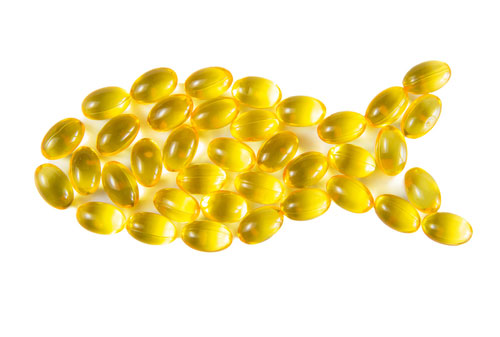
My clients often ask me which supplements they should take for anxiety and depression. Of the many choices marketed for better mental health, one supplement that may be helpful is fish oil.
What is Fish Oil?
Fish oil is a type of omega-3 fat. There are actually two forms of omega-3s, long chain and short chain. Long chain Omega-3s are what’s found in fish, and it contains the important components EPA (eicosapentaenoic acid) and DHA (docosahexaenoic acid). It’s the DHA and EPA that actually provide the benefit for anxiety and depression.
Short chain Omega-3s, or ALA (alpha-linolenic acid), are found in plant foods such as walnuts, flax seed, chia seed, canola oil and soybeans. In order to have the benefit of fish oil, the body has to convert ALA to DHA and EPA, and this happens very inefficiently. What’s so interesting, is that men convert less than 10% of ALA to EPA and DHA, while women convert almost double that amount. In either case, it takes a lot of ALA to create the needed EPA and DHA. For people who don’t eat fish, there are algae supplements, however they contain DHA, but little to no EPA.
What Is Fish Oil Good For? What does it actually do for you?
Omega-3 fats are important for healthy brain function, and high levels in the blood have been shown to reduce inflammation. Another way fish oil may benefit depression is that it increases the white matter in the brain. These are nerve fibers that connect brain cells, and impact depression.
A number of studies have shown that fish oil can help improve depression and anxiety. It can be especially helpful for those taking SSRI anti-depressants such as Lexapro, Prozac, Celexa, Paxil, and Zoloft.
How Much fish oil should I take?
It’s the EPA and DHA in fish oil that can be helpful for anxiety and depression. The tricky part is making sure you’re taking the right amount. On the front of the bottle, you’ll find the total amount of fish oil in a dose. However, that’s different than the amount of EPA and DHA it contains. Now turn the bottle around, and look on the back. This is where you’ll find the amount of EPA and DHA. For both anxiety and depression, you want more EPA than DHA. For depression, you need 1,000 mg of EPA, with about 400 mg DHA. For anxiety, you need at least 2000 mg/day EPA, with DHA less than 1200 mg.
What’s the best time to take fish oil?
Taking fish oil with a meal will increase its absorption. If you’re taking a larger amount, it may feel better to split it up, and take smaller doses throughout the day. Some people get “fishy burps”, and this can be avoided by taking a form that’s deodorized or enterically coated. Some prefer to take fish oil at night when it’s likely to affect them.
Are there any side effects?
Whether you take fish oil or any other supplements, it’s always important to check with your doctor or pharmacist to make sure there are no interactions with any of your medications. Don’t exceed the recommended dose, since high fish oil intake could act as a blood thinner, or suppress the immune system. As a dietitian, I always recommend the benefits of food first. But, since research supports it, supplements like fish oil can be helpful. If it makes sense for you, then adding the right amount of fish oil to your routine could be a great addition to improving your mood.
1 Comment
Leave a Comment

Kim Kulp, RD
Gut Health Nutrition Expert
I am a registered dietitian that specializes in gut nutrition to improve digestive and mental health. I help my clients harness the power of nutrition to support their bodies delicate ecosystem, so they can feel better. I have seen hundreds of lives transformed through the power of nutrition. I want to help you harness the gut health connection in your life so you can get “back to good!”
I would love to hear from you:
Phone 415-246-3876
Kim@GutHealthConnection.com
Need an expert voice?
Media and Brand Partnerships
I have spent so much of my life learning about nutrition and it's radical impact on both digestive and mental health. My desire is to get this information in both patients and professional hands. If you need a speaker, guest writer or expert voice, please contact me. I would be honored to answer your questions.
Kim Kulp, RD


thanks for the specifics about amounts of EPA and DHA to take and yes to food first but sometimes YOU just gotta have a supplement! I myself could never eat enough EPA and DHA and take fish oil supplements!